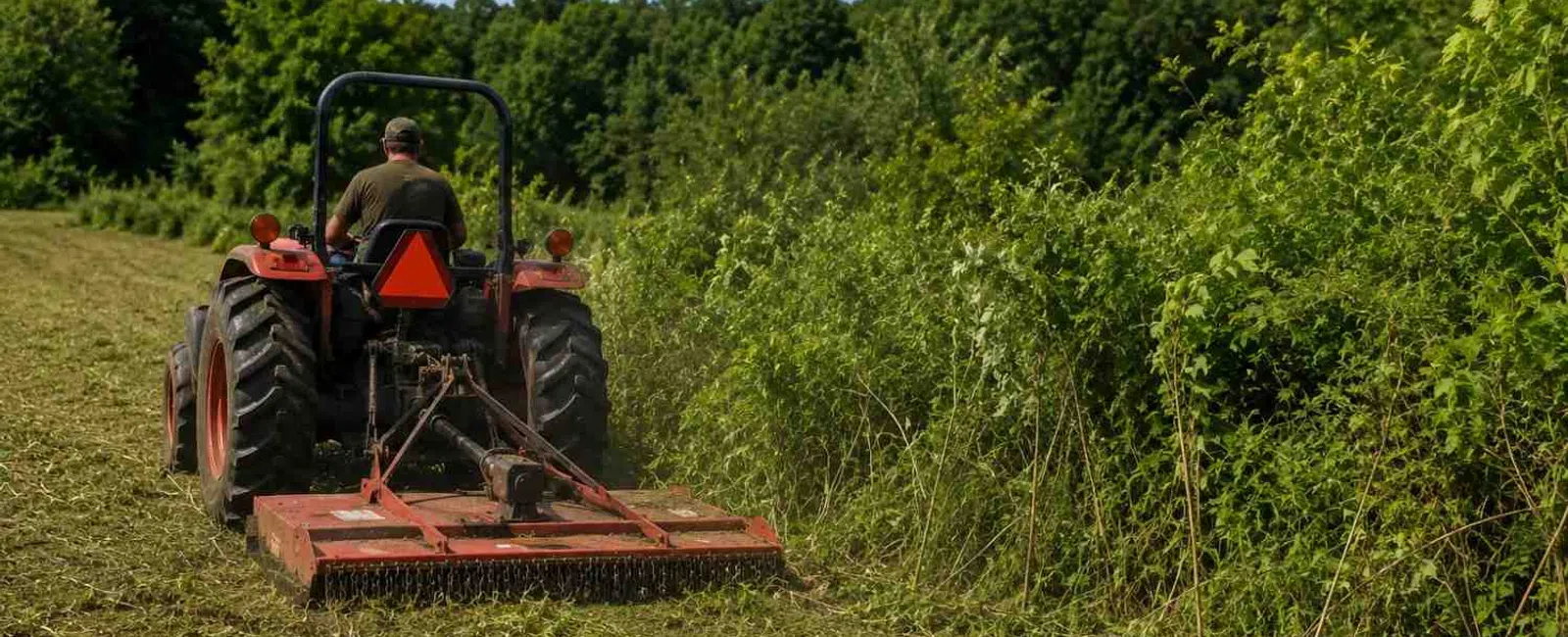
Bush hogging is the practice of cutting thick brush, tall weeds, saplings, and overgrown grass with a heavy-duty rotary cutter, usually pulled behind a tractor or mounted on a skid steer. Unlike a finish mower built for lawns, a bush hog is designed to chew through vegetation that would destroy ordinary mowing equipment, including woody stems up to a few inches in diameter. For cattle farmers and rural landowners, bush hogging is the workhorse of pasture and field maintenance, keeping land grazable, walkable, and under control.
Bush Hogging Explained
A bush hog is a rotary cutter with heavy, swinging blades attached to a spinning deck. The blades are blunt compared to lawn mower blades, and that is by design. Instead of slicing cleanly, they smash and shred whatever they hit, which lets them power through dense brush, briars, and small trees without constant sharpening or damage.
Most bush hogs run off a tractor's power take-off (PTO) shaft and trail behind the machine on a three-point hitch. Skid steer-mounted brush cutters work the same way but excel on rough terrain, steep banks, and tight spots where a tractor and pull-behind deck cannot safely go. Underneath the deck, a component called a stump jumper, a rounded plate the blades attach to, lets the cutter ride up and over rocks and stumps instead of catching on them.
Bush Hogging vs. Brush Hogging
Bush hogging and brush hogging are the same thing. The name comes from Bush Hog, an Alabama equipment manufacturer whose rotary cutters became so common after the 1950s that the brand name turned into the generic term, the same way Kleenex became shorthand for tissues. Depending on where you live, you will hear bush hogging, brush hogging, brush cutting, or rotary mowing. In Southwest Virginia, most folks say bush hogging, and they all mean the same job: knocking down heavy vegetation with a rotary cutter.
The Vegetation a Bush Hog Can Handle
Bush hogging covers the middle ground between lawn mowing and full land clearing. A rotary cutter makes quick work of:
- Overgrown pasture grass and hay fields past their prime
- Broadleaf weeds, thistle, and invasive growth like multiflora rose
- Briars, brambles, and blackberry thickets
- Saplings and woody brush, generally up to two or three inches in diameter, depending on the cutter
- Fence lines, ditch banks, and field edges where growth creeps in every season
What a bush hog cannot do is remove what it cuts. The shredded material stays on the ground as mulch, and roots and stumps stay in the soil. Cut saplings will send up new shoots, which is why regular bush hogging is a maintenance practice rather than a one-time fix.
Bush Hogging on a Cattle Farm
For cattle operations, bush hogging is less about looks and more about the health of the pasture. Clipping pastures after grazing rotations knocks down the weeds and seed heads cattle refuse to eat, which keeps unpalatable plants from taking over and gives desirable forage grasses room to regrow. Mowing also breaks up manure clumps and evens out rough grazing patterns across the field.
Fence lines are the other big one. Brush growing into a fence pulls wire, rots posts, shorts out electric strands, and hides damage until a cow finds the weak spot for you. Keeping a mowed buffer along your fences protects the investment and makes inspections easy. If your fence has already lost that battle, our farm fencing services can rebuild it right, and regular farm maintenance keeps it clear from then on.
Bush Hogging vs. Full Land Clearing
Bush hogging manages growth. Land clearing removes it. If a field has gone a season or three without mowing, a bush hog will bring it back. But once brush matures into stands of trees, heavy cedar, or root systems that resprout faster than you can cut, mowing alone stops being the answer. That is when the job calls for forestry mulching, grubbing, or excavation to take vegetation out at the root and reset the land.
A good rule of thumb: if you can drive a tractor through it, it can probably be bush hogged. If you cannot, you are looking at a land-clearing project. The good news is that clearing is a one-time cost, and routine bush hogging afterward keeps the land from ever getting away from you again.
The Factors That Affect Bush Hogging Cost
Bush hogging is typically priced by the acre or by the hour, and the price depends on the condition of the land more than its size. The main factors are:
- Density and height of growth. Waist-high grass mows fast. Head-high briars and saplings slow the machine down and take more passes.
- Terrain. Steep hillsides, wet ground, rocks, and hidden stumps all add time and equipment risk. Much of Southwest Virginia is not flat, and it mows accordingly.
- Access and obstacles. Gates, tight corners, fence lines, and debris in the field require more careful, slower work.
- Acreage. Larger jobs usually cost less per acre since mobilization is spread across more ground.
Because those variables swing so widely from one property to the next, the most accurate number will always come from a quote on your specific land rather than a generic per-acre figure.
The Best Time to Bush Hog
Most pastures and fields in our region do well with mowing from late spring through early fall. Clipping pastures after each grazing rotation keeps weeds from going to seed, and a late-season cut puts the field to bed clean before winter. For fields being reclaimed from neglect, late summer is a popular time to knock growth down before it hardens off. Frequency matters more than perfect timing. One or two cuttings a year maintains most fields, while fast-growing or recently reclaimed ground may need more.
Bush Hogging Services in Southwest Virginia
Ranch Hand Agricultural Services handles bush hogging, pasture clipping, and fence line mowing for cattle farmers and landowners across Abingdon, Bristol, Marion, and the surrounding Southwest Virginia counties. We were raised on farms, we run the right equipment for steep and rough ground, and we back every job with fast, honest quotes. If your fields are getting ahead of you, request a quote online or call us at 276-739-8116 and get it handled.