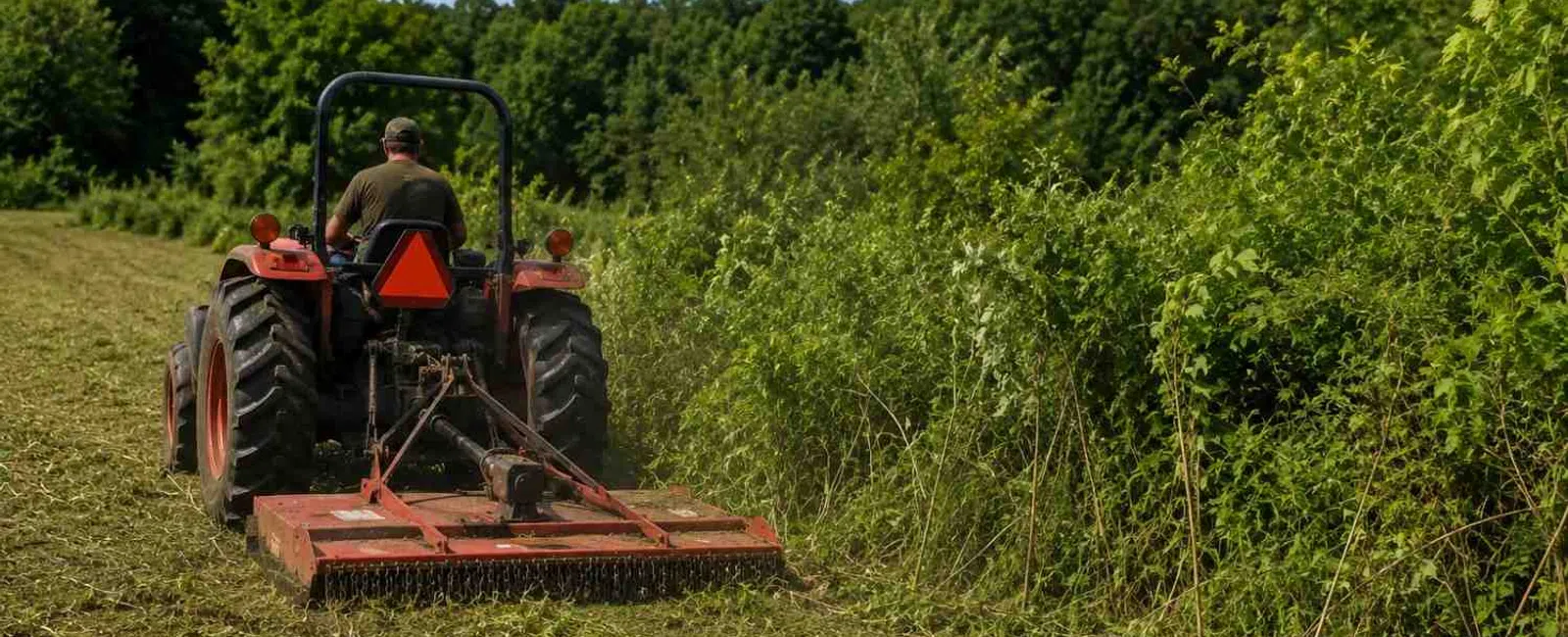
We often get asked whether a job needs a forestry mulcher, a brush hog, or a skid steer with a grapple. The honest answer is that it depends on what is growing on the land, what you want to end up with, and what the terrain looks like. Here is how we think it through.
Forestry Mulcher: Standing Brush and Small Trees, In One Pass
A forestry mulcher is a drum with fixed steel teeth that grinds standing brush, saplings, and small trees into mulch right where they stand. One machine, one pass, no burn pile, no hauling.
It is the right tool when you are reclaiming overgrown ground and want it opened up fast while leaving the mature hardwoods you care about. The layer of mulch it leaves behind holds soil in place and breaks down into nutrients over time, which matters on the rolling, erosion-prone ground common in this region. If you just bought a property that has sat untouched for years and the fence rows have grown shut, this is usually where we start.
Where a mulcher is not the answer: heavy timber past its size range, or when you need bare dirt for a foundation. It cuts the vegetation, but it does not pull stumps.
Brush Hog: Keeping Open Ground Open
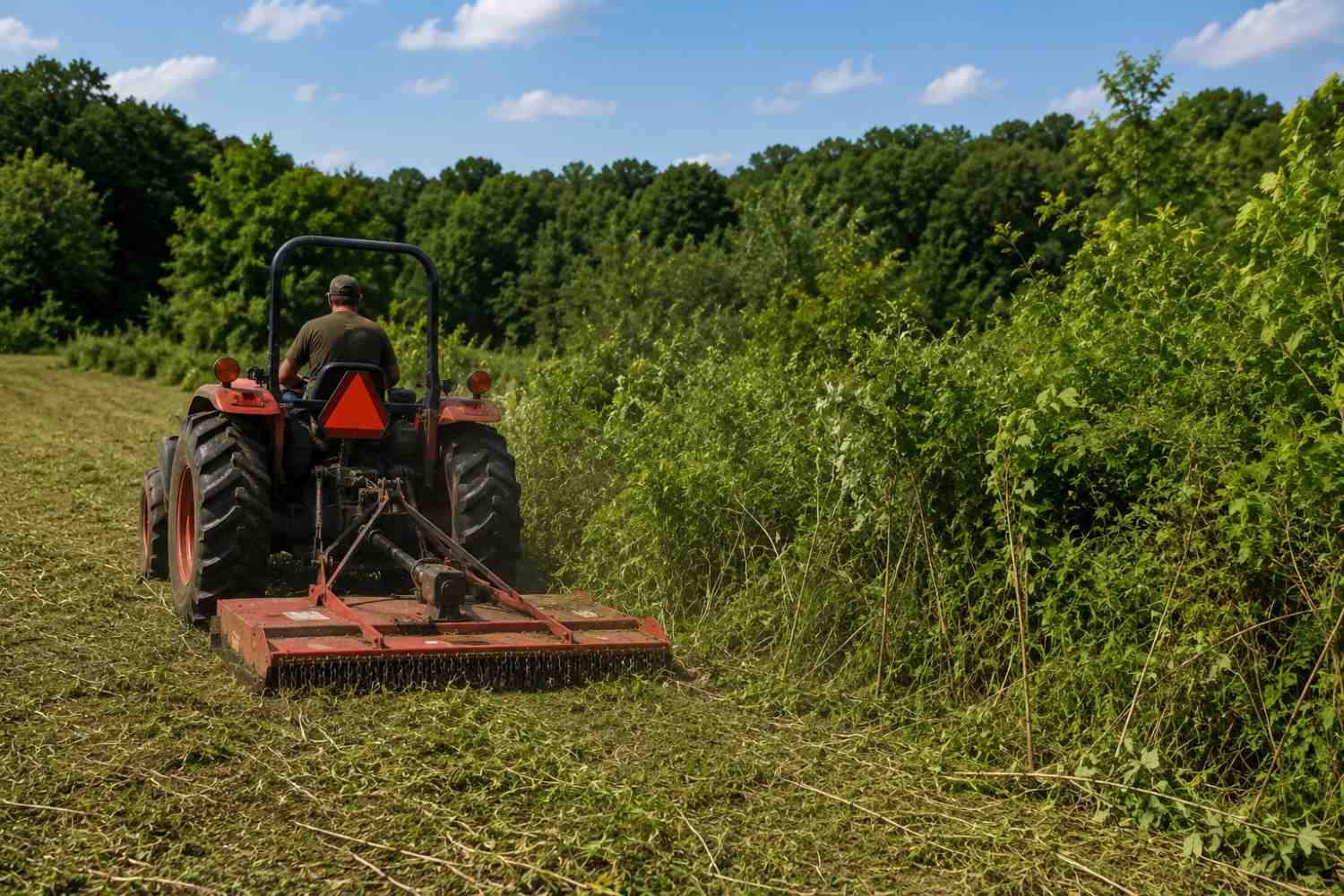
A brush hog is a heavy rotary cutter that mows down tall grass, weeds, briars, and light brush. Think of it as maintenance more than reclamation.
It is the right tool when the ground is already fairly open and you want to keep it that way, or knock back a field that has gotten shaggy over a season or two. For pastures, hayfields, and trails that just need to stay clear, a brush hog is faster and cheaper than bringing in a mulcher. What it will not do is handle saplings and woody growth much thicker than your thumb. Point a brush hog at a stand of small trees and you will beat up the equipment without getting the result you want.
Skid Steer With a Grapple: Moving What Is Already Down
A skid steer with a grapple attachment is about handling material, not cutting it. It picks up, piles, and hauls downed trees, brush, rock, and debris.
It is the right tool when there is already material on the ground that needs to be gathered and moved, or when a job calls for cleanup after storm damage or a heavier clearing pass. Often it works alongside the other two rather than instead of them. We might mulch the brush, then bring in the skid steer to clean up the bigger pieces the mulcher was not built for.
Most Jobs Use a Combination
Here is the part folks do not always expect: the best answer is frequently more than one machine. A pasture reclamation might mean the mulcher for the brush and saplings, a brush hog to clean up the grass and briars, and a skid steer to move the few big pieces that are left. Matching the equipment to the ground is the whole game, and getting it wrong costs you time and money.
That is why we walk every job before we quote it. Photos and acreage only tell us so much. Standing on the ground tells us about the slope, the soil, the drainage, what is actually growing out there, and what you want the land to look like when we are done. That walk is what tells us whether you need one machine or three.
Land Clearing Across Southwest Virginia
Ranch Hand Agricultural Services handles land clearing across Southwest Virginia from our base in Abingdon. We are veteran-owned and owner-operated, we run the right equipment for the ground in front of us, and you get one crew from the first walk to the last pass. No guesswork, no upselling you a machine your land does not need.
If you have ground that needs opening up, request a quote, and we will come walk it with you.