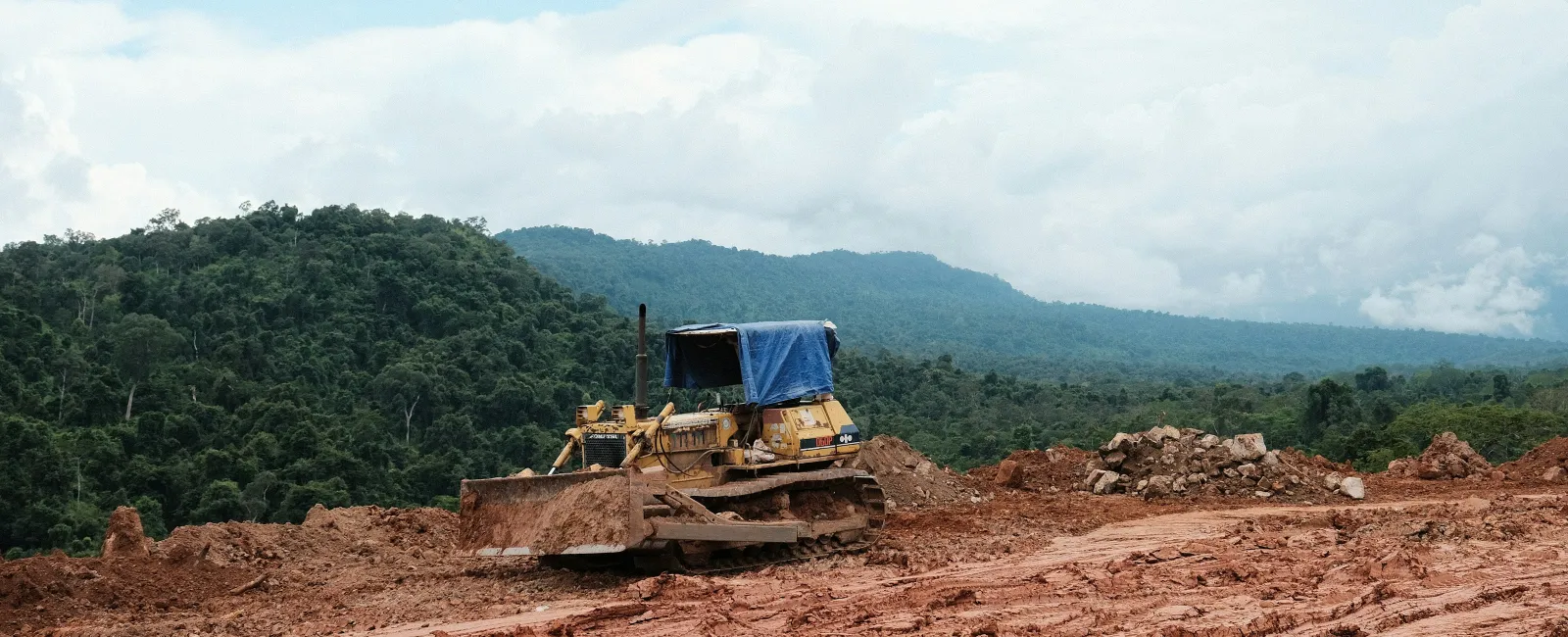
Land clearing is the work of removing trees, brush, stumps, overgrowth, and debris from a property so the ground can be put to use. That use might be pasture for cattle, a clean fence line, a building pad, or simply acreage you can walk across again. For farm and ranch owners across Southwest Virginia, land clearing is one of the most common first steps toward making a piece of property productive.
What Land Clearing Actually Means
Plenty of people picture a bulldozer scraping everything down to dirt. Real land clearing is more selective than that. In agriculture, land clearing is the removal of unwanted growth and obstacles while protecting the soil, drainage, and any trees worth keeping. The end goal is usable land, not a bare lot.
On a working farm, that often means turning overgrown ground back into something purposeful. A pasture that has filled in with cedar and briars, a fence line buried in brush, or a barn lot lost to saplings can all be reclaimed without tearing up the whole property.
Common Reasons Landowners Clear Land
Most clearing jobs in this region come down to a handful of needs. Pasture reclamation is near the top, since open grazing land grows back into brush faster than most owners expect. Clearing also opens up fresh fence lines, so new fencing can go in straight and stay accessible.
Other owners clear ground for a barn lot, a building pad, a driveway, or better access to a back field. Some simply want defensible space around a home or outbuilding, with brush and small timber pulled back from the structure. Whatever the reason, the work starts with knowing what you want the finished land to do.
How Land Clearing Gets Done
The right method depends on what is growing, how steep the ground is, and what you want left behind.
Forestry mulching grinds brush and small trees into mulch that stays on the ground, protecting the soil and skipping the burn pile. A brush hog handles tall grass, briars, and light overgrowth across open acreage. A skid steer with a grapple pulls and stacks larger material, while a dozer handles heavy clearing and grading on bigger jobs. Most real-world projects use a combination, matched to the land in front of the crew.
This is also where manual and mechanical clearing differ. Manual clearing relies on chainsaws and hand tools for small spots. Mechanical clearing uses equipment to cover real acreage in a fraction of the time, which is what most farm and ranch work calls for.
Ready to Reclaim Your Land?
If you have overgrown pasture, a buried fence line, or acreage you want back, Ranch Hand can walk the property and give you a clear, honest quote. Fencing, clearing, barn lots, and hauling all run under one operation, so you make one call and deal with one crew.
Call Ranch Hand at 276-739-8116 or request a quote online to get started.