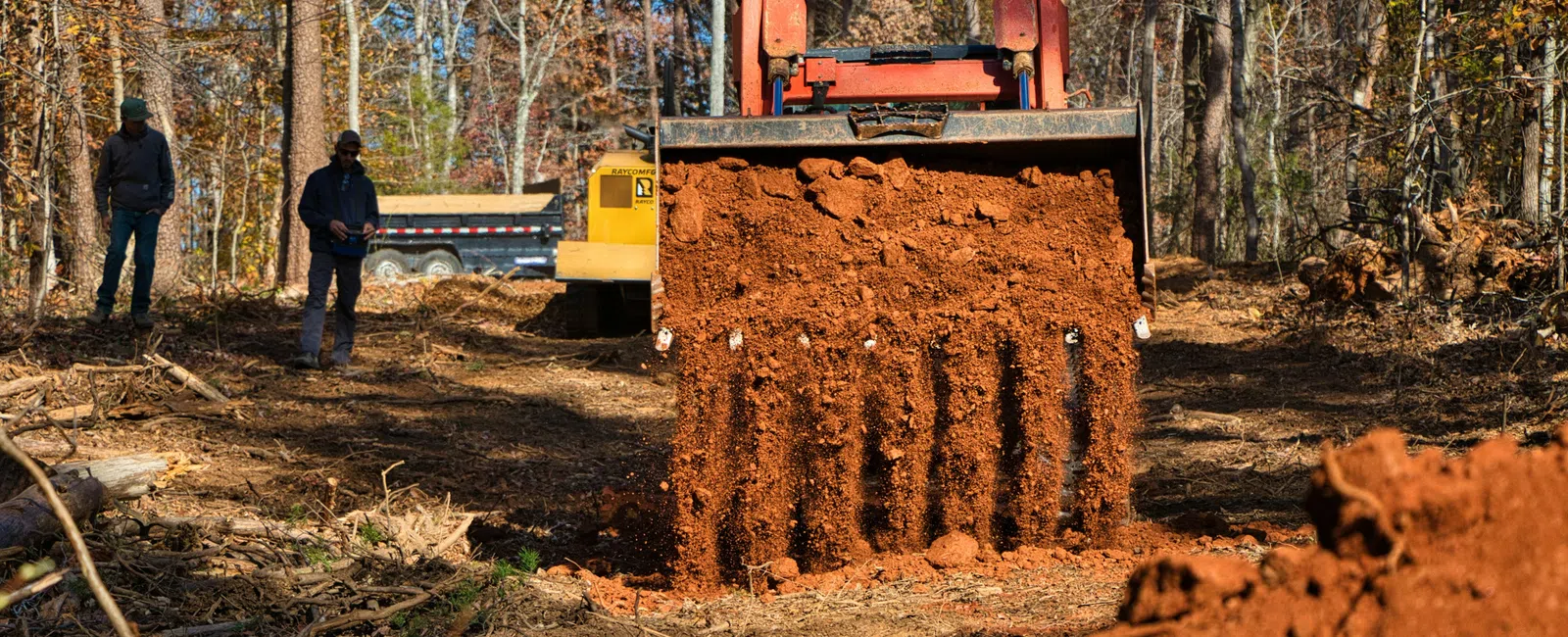
Clearing land requires equipment such as a skid steer or compact track loader fitted with attachments like a forestry mulcher or brush cutter, an excavator for stumps and roots, a bulldozer for larger acreage, chainsaws for selective cutting, a stump grinder, and trucks or trailers to haul off the debris. Deciding what equipment is needed depends on how much land you are clearing, what is growing on it, and what you plan to do with it afterward.
The Core Land Clearing Equipment
- Skid steer or compact track loader. With the right attachment, it can mulch brush, cut small trees, move logs, and grade the ground.
- Forestry mulcher (or mulching attachment). A mulching head grinds standing brush and small trees into wood chips right where they stand, so there is no pile to burn or haul. It is the cleanest way to clear overgrown ground.
- Brush cutter and grapple attachments. A rotary brush cutter mows down heavy weeds and saplings. A grapple grabs and stacks logs, root balls, and debris.
- Excavator. When you hit stumps, large roots, or buried rock, an excavator pulls them out and helps with rough grading.
- Bulldozer. For larger acreage, a dozer pushes over trees, clears in straight passes, and levels the ground fast.
- Chainsaws and hand tools. Still essential for felling select trees and finishing the spots a machine cannot reach.
- Stump grinder. Grinds leftover stumps below grade so the ground is actually usable.
- Dump trucks and trailers. Whatever you cut has to go somewhere. On most properties, hauling is half the job.
Match the Equipment to the Job
Not every property needs every machine. A good rule of thumb:
- Light brush and overgrown fence lines: a skid steer with a brush cutter or mulching head usually handles it.
- Reclaiming overgrown pasture: forestry mulching is ideal because it clears the growth and leaves a mulch layer that protects the soil.
- Wooded acreage: expect a dozer or excavator working alongside mulching and hauling equipment.
- Stumps, roots, and rock: an excavator and stump grinder do the heavy lifting.
Knowing which machine to put where is where experience matters most. The wrong approach can strip your topsoil, leave a field full of ruts, or cost you days of extra work fixing what a rushed job tore up.
Should You Rent the Equipment Yourself?
You can rent a skid steer or a mulching head, and plenty of landowners do. However, a day rate on a tracked machine plus a mulching attachment adds up fast, and most clearing jobs take more than a day. These machines are heavy, and on the slopes and hollows common across Southwest Virginia, they are genuinely dangerous in inexperienced hands. You also still have to deal with the debris, which often means a second rental or a burn permit. Add in the learning curve and the risk of damaging your land, and the rental savings usually disappear.
That is the case for hiring a crew that already owns the equipment, runs it every day, and hauls the debris when the job is done.
One Crew, One Call
At Ranch Hand, you are not renting a machine and hoping for the best. You are hiring people raised on the land, backed by HD Livestock, with the equipment, labor, and ag knowledge to clear your property the right way. Fencing, clearing, hauling, and maintenance all run under one operation, so it is one number, one crew, one bill.
We proudly serve Abingdon, Bristol, Marion, Wytheville, and the surrounding Southwest Virginia communities.
Call 276-739-8116 or request a fast quote online today.
Frequently Asked Questions
What is the best equipment for clearing land?
For most jobs, a skid steer or compact track loader with a forestry mulcher or brush cutter attachment is the most versatile choice. Larger or heavily wooded properties also need an excavator or bulldozer, plus trucks and trailers to haul debris.
Can I clear land myself with rented equipment?
You can, but it is rarely as cheap or simple as it looks. Rental day rates add up, the machines are heavy and dangerous on uneven ground, and you still have to handle the debris. Many landowners find hiring an experienced crew costs less than expected once all of that is factored in.
What is forestry mulching?
Forestry mulching uses a mulching head to grind standing brush and small trees into wood chips on the spot. It clears overgrown ground in a single pass and leaves a protective mulch layer behind, with no piles to burn or haul.
How much land can be cleared in a day?
It depends on the terrain and how thick the growth is. Light brush can move quickly, while wooded acreage with stumps and rock takes much longer. A site visit is the only way to give an accurate timeline and quote.