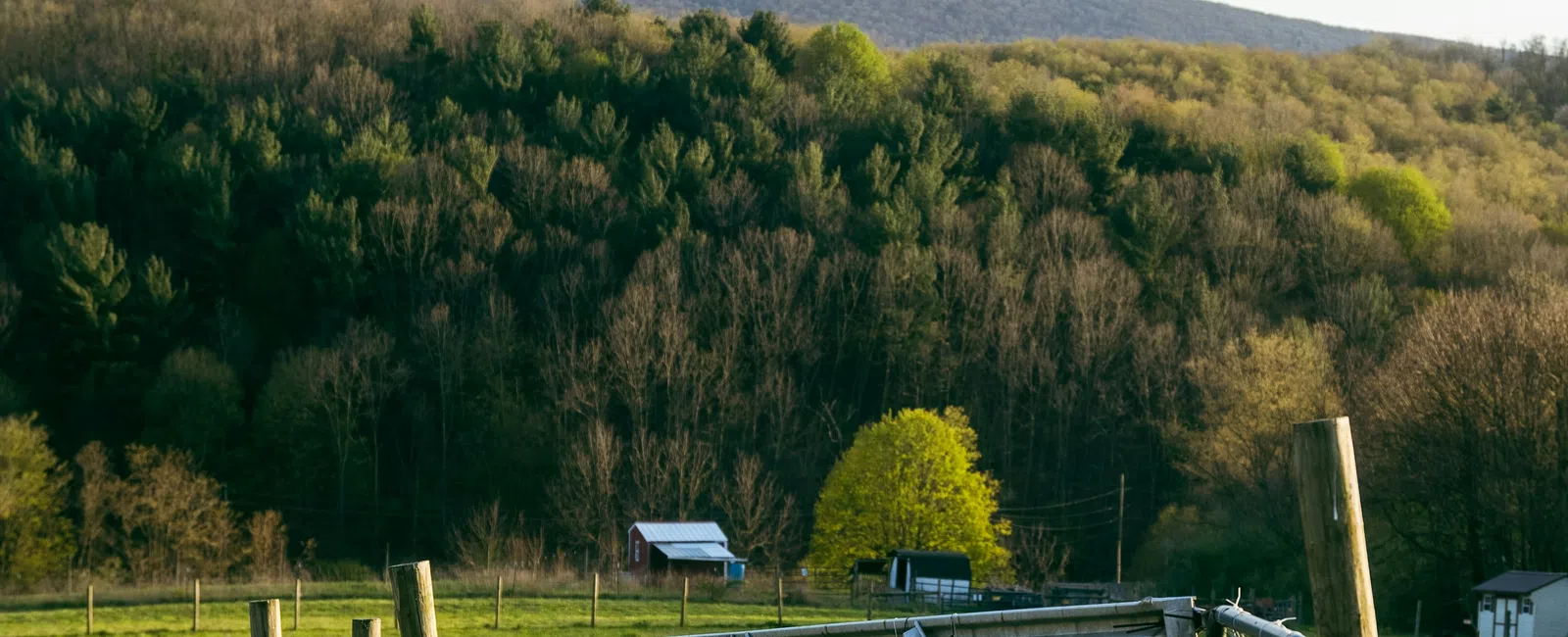
A farm gate that drags, sags, or has to be lifted to latch is one of the most common problems on a working farm, and one of the most misdiagnosed. The gate itself is rarely at fault, and replacing it usually just resets the clock on the same failure. The post holding it is almost always where the trouble started.
The Gate Is Usually Not the Problem
The test takes about ten seconds. Lift the latch end of the gate and watch the hinge post while the weight comes off, and if the post rocks, tips, or twists in the ground, that is the answer. The gate is still square; it is simply hanging off a post that has been slowly rotating in the dirt for years.
What causes that rotation is leverage. A sixteen foot gate is a sixteen foot lever, so its weight, along with every cow that ever rubbed against it and every hard swing it ever took, concentrates on the top of the hinge post and works to pull it over. Once the ground gives even slightly, the post tips toward the opening, the latch end drops, and the gate begins to drag, which only adds more strain to a post that is already losing. Hang a brand new gate on that same post and it will be dragging again within a couple of years.
Sizing and Setting the Hinge Post
A hinge post is not a line post that happens to have a gate bolted to it. It carries a load nothing else in the fence has to deal with, which means a heavier post than the rest of the line, set deeper, and chosen for the specific gate it has to hold. A twelve foot gate and a sixteen foot gate are not the same ask, and a post that is adequate for one may be marginal for the other.
How the post gets set matters as much as how big it is. Much of Southwest Virginia sits on heavy clay that holds water, and a post packed tight with crushed stone will drain and stay tight through years of freeze and thaw. A concrete collar poured flush with the ground can do the opposite by trapping water against the wood and rotting it right at the base, which is exactly where the leverage is highest and where failure is least forgiving.
A Gate Post Needs Bracing Like a Corner
This is the step most often skipped, and it is the one that separates a gate that lasts from a gate that becomes an annual chore. A gate post sits under constant one-directional pull in the same way a corner post does, so it needs to be braced back into the fence line where that pull can be transferred down the run instead of absorbed by dirt.
Setting a heavy post deep and stopping there will hold for a while, but bracing is what keeps a gate swinging level fifteen years later. A fence with well-braced corners and an unbraced gate post will lose the gate long before it loses anything else.
Hinges Carry the Load Two Different Ways
Both hinges tend to get mounted the same way out of habit, but the two are doing opposite jobs:
- The top hinge is in tension. It is being pulled away from the post as the gate hangs, so it works loose over time and is worth checking whenever the gate starts to drop.
- The bottom hinge is in compression. It carries the actual weight of the gate and takes the brunt of any impact.
- The pins should oppose each other. Setting the bottom pin pointing up and the top pin pointing down means the gate cannot be lifted off its hinges, whether by a person or by a determined bull.
If a gate has dropped but the post underneath it is still solid, adjustable hinges will often bring the latch end back to level without any other work being needed.
Where to Put a Gate
Placement determines how much abuse a gate absorbs over its life, and three things are worth settling before the post goes in the ground:
- Corners beat mid-line. Cattle follow a fence line to the corner on their own, so a gate in the middle of a straight run means someone has to push cows past an opening they cannot see.
- Avoid the low spot. A gateway at the bottom of the grade collects both water and hoof traffic, and by February it has usually turned into a hole.
- Size it for the largest equipment on the place. Sixteen feet is the standard width for good reason, because a gateway too narrow for a truck and trailer or a hay wagon becomes a permanent bottleneck.
What Makes a Gate Fail Early
Nearly every dragging gate traces back to one of these:
- An undersized hinge post carrying a long, heavy gate
- A gate post that was set but never braced back into the line
- A gate hung directly on a corner post, leaving one post to fight two loads
- Hinges mounted with both pins running the same direction
- A gateway in wet ground with no rock underneath it
Getting It Hung Right
A gate is the part of a fence that gets handled every single day, which makes it the one place where a heavier post and an extra hour of work pay back the fastest.
Ranch Hand handles gate repair as part of ongoing farm maintenance across Southwest Virginia, along with fence line clearing and storm response, and installs, repairs, and replaces working farm fence. A dragging gate is usually a short job. See the fencing page for the full scope of work, or barn lots if the gateway itself needs rock under it, and get in touch for a look at the line.